Introduction
Pizza is among the most widely consumed foods worldwide, but not all pizza is created equal. Roman Pizza has excelled by offering specific taste, texture, and customs; despite this, it is sometimes welcomed as “original”. Roman Pizza is worthy of your attention, whether you are interested in searching for different pizza varieties or learning more about Italy, even though your gastronomic enthusiasm.
What is Roman Pizza?
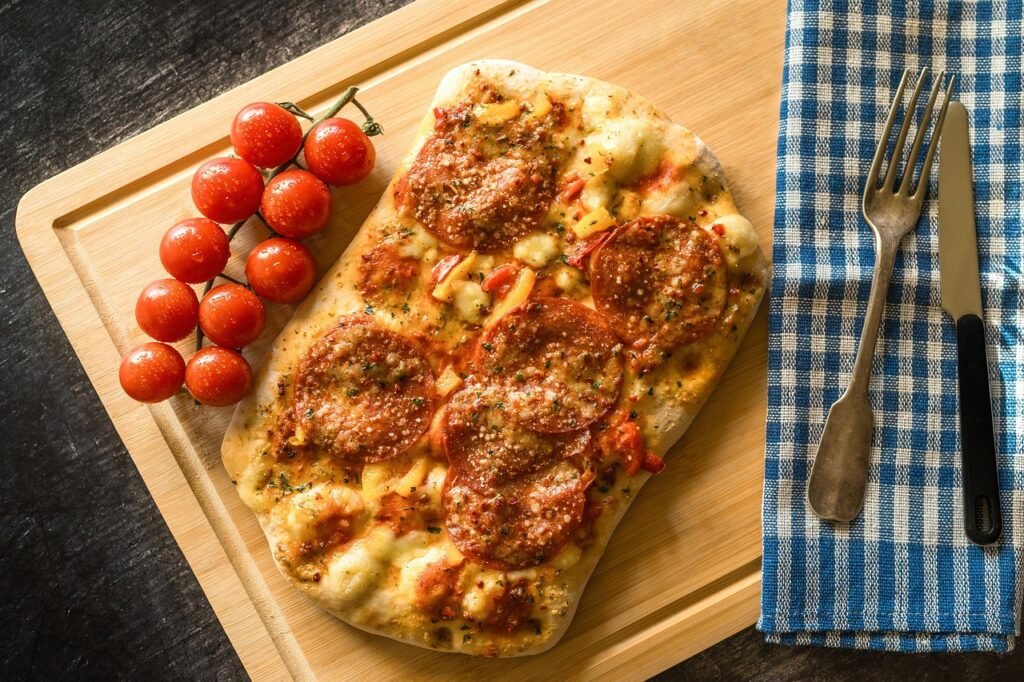
Roman-style pizza is thin-crust and rectangular, like Napoli-style or circular pizza. This Pizza, locally known as “Pizza Romana”, refers to the traditional style of pizza originating in Rome.
Unlike soft, ventilated destiny pizza, the pizza romana is known for its sharpness, thinness, and flavor balance. Bakers use less water in the flour and allow it to ferment for an extended period, resulting in a crispy texture that retains a light color.
There are two main styles of pizza romana:
- Pizza al Tagliata (Pizza by Slices):
The rectangular board is sold, cut with scissors, and the weight is priced. Perfect for eating on the streets of Rome.
- Pizza Tonda Romana (Round Roman Pizza):
A thin, round pizza is cooked in an oven made of a tree, known for its crispy base and a delicate crunch with each bite.

History of Roman Pizza
The origins of Roman pizza can be traced back to flatbread topped with cheese, oil, and herbs, a popular roadside breakfast in ancient Rome. Despite their simplicity, these early returns established the groundwork for modern pizza culture.
In the 1900s, Roman bakers developed the famous pizza al taglio, now perfect for the busy city lifestyle. With Rome’s fast-moving lifestyle, rectangular pizza was baked in large trays, and weighing became extremely popular. This street food style is still a staple in Roman everyday life.
One of Italy’s most popular exports, this Pizza has several variations inspired by tradition and creativity.
Roman vs. Neapolitan pizza: Huge Difference
Many people confuse Neapolitan pizza with the traditional pizza; However, they are different:
- Texture: Romana pizza is sharp and crisp, while Napolitan pizza is soft, chewy, and elastic.
- Size: Roman Pizza Al Taglio is rectangular; Happiness is always round.
- Cooking style: Roman pizza is prepared at low temperatures.
- Toppings: Seasonal vegetables, cured meats, and cheese are commonly added to the top of Roman pizza.
Roman Pizza vs Neapolitan Pizza: Quick Comparison Table
Feature | Roman Pizza (Pizza Romana) | Neapolitan Pizza (Pizza Napoletana) |
Crust | Thin, crispy, crunchy | Soft, chewy, elastic |
Shape | Rectangular (pizza al taglio) or round (tonda) | Always round |
Cooking Method | Lower temperature, baked longer | Extremely high heat, baked in 60–90 seconds |
Dough Hydration | 55–60% (less water, crispier) | 65–70% (more water, softer) |
Toppings | Creative: potatoes, zucchini blossoms, prosciutto | Traditional: tomato, mozzarella, basil |
Best For | Light meal, street food, or crispy dining | Rich, authentic Italian experience |
The Secret Behind Roman Pizza Dough
The dough is one that actually separates the pizza from the crust. Bakers usually use low-hydrated dough (about 55-60% water, compared to 65-70%), which helps achieve crumbly textures similar to fireworks. It is also allowed to ferment gradually, sometimes up to 48 hours, which gives a rich taste without weight.
Some modern Roman bakers experiment with whole grains, and the combination of flour and citrus begins to add depth and nutrition, making it even more attractive to health-conscious eaters.

Ingredients & Easy Recipe
You can create real Roman pizza at home if you can’t visit Rome! It simply takes a few good components to make the recipe.
Ingredients for Roman Pizza Dough (2 large pizzas)
- 500 g (4 cups) all-purpose flour (Italian “00” is ideal)
- 1 cup (280 ml) water (55-60% hydration)
- 2 tsp salt
- 3 tsp dried yeast (or 10 g fresh yeast)
- 20 ml olive oil
Step-by-step recipe
- Prepare flour
Combine water, yeast, and flour to make a sticky dough. Knead until smooth with salt and olive oil.
- Fermentation
Put the dough in the fridge and let it rest for 24 to 48 hours. Slow fermentation creates the light, crispy texture Roman pizza is famous for.
- Shape the Pizza
Divide the dough into sections when it’s ready. For pizza al taglio, spread it on a rectangular tray. Make a thin, circular pizza tonda.
- Pre-Bake (Optional but Recommended)
Add a final topping of tomato sauce or olive oil, and sprinkle with another topping or your choice.
- Add Toppings
Add a final topping of tomato sauce or olive oil, and sprinkle with another topping or your choice. Keep it simple – Roman Pizza is about balance, not overload.
- Final bake
Fry at 250 °C (480 °F) for 7-10 minutes (in a house oven) or until golden and crisp.
- Serve and enjoy
Enjoy slices, stocks, and authentic Roman pizza at home!
Styles of Roman Pizza You Must Try
Pizza al Taglio (By the Slice)
The most famous Roman pizza, pizza al Tagliata, is made on broad rectangular boards, cut with scissors, and sold by weight—a sensible, inexpensive, and delicious lunch alternative.
Pizza Tonda Romana (Round Roman Pizza)
This is a thin, circular, sharp Roman pizza served seated. It is served heated from a three-layer oven with tomatoes, mozzarella, and parmesan.
Pizza Bianca (White Roman Pizza)
Not all pizza requires tomato sauce. Pizza Bianca -bus stops with olive oil, salt, and rosemary. People in Rome often eat it or cut it cold for a quick snack.

Popular Roman Pizza Toppings
This pizza is often simple, but flavor-filled. Some of the favorites include:
- Margherita Romana: Tomato, Mozzarella, and Basil, but on a sharp Roman base.
- Pizza Bianca: Olive oil, salt, and henna are daubed on white pizza for snacking.
- Pizza with Prosciutto & Arugula: A classic Roman topping that combines Namkeen fine Haim with fresh greens.
- Zucchini Flowers and Anchovies: A Roman feature that highlights local, seasonal components.
- Pizza with potatoes: Thinly sliced potatoes with olive oil and rosemary, surprisingly light and delicious.
Where to Eat Roman Pizza
If you are ever in Rome, there are some famous places here:
- Pizzerium (by Gabriel Bonci): “Michelangelo of Pizza.” Bonci’s Pizzerium is world-famous for its pizza al taglio.
- Forno Campo Day ‘Fiori: A historical bakery serving the locals for decades, offers pizza Bianka and pizza pink.
- La Gatta Mangiona: A beloved pizzeria specializing in high-quality Roman Tonda.
Why Roman Pizza is Becoming Popular Worldwide
Pizza Romana, with its Light, Crisp Crust and wide toppings, has quickly become popular outside Italy. Unlike heavy pizza styles, it seems easy to digest, offering a taste of indulgence. Many chefs and pizzerias around the world are using Roman methods, proving that this pizza style will live here.
Roman pizza and Italian food culture
Pizza is a way of life in Rome. People eat pizza al taglio at lunch, pizza tonda for dinner with friends, and pizza bianca all day. The city has history, convenience, and inventiveness.
This Pizza is also an essential part of Italy’s Pakistani identity. Like pasta and Gilateo, pizza represents the Italian passion for simplicity and quality materials.
FAQs
What is Roman pizza called in Italy?
In Italy, Roman pizza is called Pizza Romana. The two most famous styles are pizza al Tagliata (slices) and pizza Tonda Romana (thin, round, and sharp).
What sets Roman pizza apart from normal pizza?
Pizza Romana has a crisp crust and creative toppings including potatoes, zucchini blossoms, and prosciutto. Typical American pizza is thick and hefty.
Can I make Roman pizza at home?
Absolutely! Ordinary ovens can bake this pizza at 250°C (480°F). Pizza stones or preheating the board make it crispy.
Is Roman pizza healthier than fat or American pizza?
Thin, crispy foundation, extensive fermentation, and modest cheese and oil usage make this pizza lighter and healthier.
Where can I eat the best Roman pizza in Rome?
Top spots include Pizza al Tagliere by Gabriel Bonci Pizzerium, Forno Campo de’ Fiori for Pizza Bianca, and La Gatta Mangiona for Pizza Tonda Romana.

Conclusion
Roman pizza may not be as well-known worldwide as classic Italian pizza. You will understand why Italians love it so much after you eat it for the first time, however. With its sharp base, contemporary topping, and centuries-long history, the book strikes the perfect balance between the two.
When you visit Rome or visit a local pizzeria, you must try some real Roman food.